- August 27, 2026
- 4:44 am
- No Comments
A parent’s guide to building speech and Vocabulary
Communication is an important part of a child’s overall development. Strong speech and language skills can support children in forming friendships, expressing their needs and emotions, engaging in learning, developing early literacy skills, and building confidence.
There are many simple and enjoyable ways parents and carers can encourage communication at home. From talking and reading together to playing interactive games and creating opportunities for your child to express themselves, everyday activities can make a meaningful difference.
Let’s explore some fun and practical speech and language activities you can try with your child to help build their communication skills.
Talk During Everyday Moments: talk, talk & talk!
Children learn language by hearing and participating in conversations with the people around them. Even before babies can say their first words, they are listening to voices, learning sounds and beginning to understand how communication works. Talking to your child throughout the day gives them opportunities to hear new words and learn how language is used.
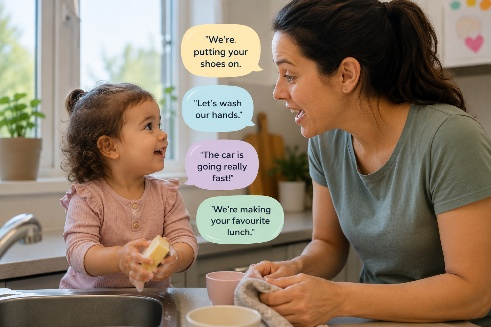
Try talking about what you are doing together:
“We’re putting your shoes on.”
“Let’s wash our hands.”
“The car is going really fast!”
“We’re making your favourite lunch.”
You can also describe what your child is doing, rather than simply asking questions. This gives them language they can hear, understand and eventually use themselves.
Remember: It’s not just about how many words your child hears. Meaningful, face-to-face interaction gives children valuable opportunities to listen, respond and take part in communication.
Sing, Rhyme and Have Fun: Make Language Musical
Songs and nursery rhymes are a fun way to introduce children to sounds, words, rhythm and repetition. Singing can help children become familiar with:
New vocabulary
Rhyming words
Rhythm and patterns
Different sounds
Changes in pitch and volume
You don’t need to be a great singer! Your child will probably be much more interested in joining in and having fun than judging your singing skills. Try singing during everyday activities — in the car, while getting dressed, during bath time or before bed.
Try this: Pause before the last word of a familiar song and give your child the opportunity to fill in the missing word.
Build on what your child says: Extend and Correct through modelling
For those of you with older infants and toddlers who are talking in single words or short sentences, it can be helpful to repeat their comments or requests as a full sentence to model what you’d like them to learn. When your child begins using single words or short phrases, you can help develop their language by adding a little more information to what they say. For example:
Child: “Dog!” You: “Yes, a big dog!”
Child: “Car go!” You: “The red car is going fast!”
Child: “Want juice.” You: “You want some apple juice.”
This technique gives your child a natural example of how to use longer phrases and sentences without requiring them to repeat after you. You can also model the correct pronunciation of words if your child says something incorrectly. For example:
Child: “Tat” You: “Yes, a cat!”
There is no need to make your child repeat the word. Simply hearing the correct model during a positive interaction can provide a helpful example.
Play and Learn together Turn playtime Into Language time
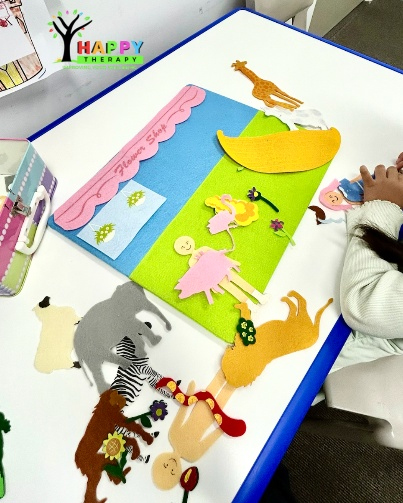
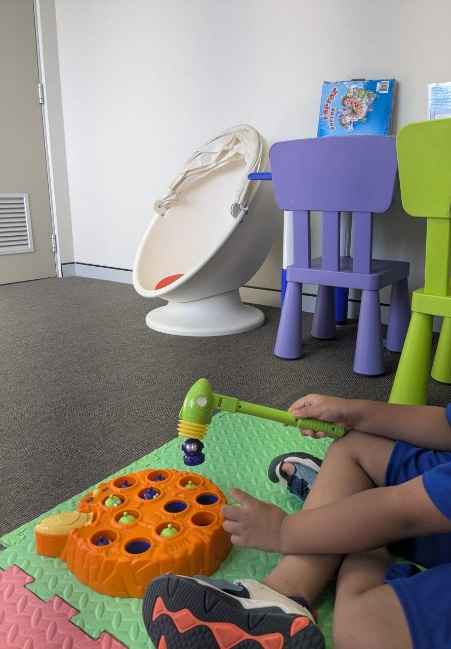
Play provides children with countless opportunities to practise communication. While playing together, talk about what you can see, describe objects and actions, and introduce new vocabulary. Try activities such as:
I Spy “I spy something that is blue.”
Describing games “Can you find something that is soft?”
Guessing games “I’m thinking of an animal that has four legs and says ‘woof’.”
Category games “Let’s think of all the animals we can name.”
Rhyming games “What rhymes with cat?”
These activities can be adapted to suit your child’s age and communication level. Most importantly, follow your child’s interests and make the interaction enjoyable.
Read, Talk and Explore Make books part of everyday
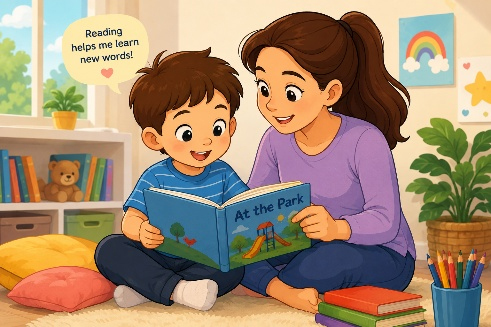
Reading together is another wonderful way to build your child’s vocabulary and understanding of language. You don’t always need to read every word on the page. Talk about the pictures, ask your child what they notice and encourage them to predict what might happen next. Try questions such as:
“What can you see?”
“Where is the dog?”
“What do you think will happen?”
“How do you think she feels?”
“What happened at the beginning?”
For younger children, simply pointing to pictures and naming objects is a great place to start.
How to create everyday opportunities
Communication practice can happen anywhere. Try using everyday routines as opportunities to talk and introduce new vocabulary:
At breakfast: Name foods, colours, textures and tastes.
Getting dressed: Talk about clothing, body parts and actions.
At the shops: Name items, describe what you see and talk about quantities.
In the park: Talk about movement, animals, nature and what is happening around you.
In the car: Sing songs, play “I Spy” or talk about things you see outside.
Small conversations throughout the day can create many opportunities for children to hear and practise language.

Little Conversations Make a Big Difference
Every conversation, song, story and game gives your child another opportunity to learn. By talking with your child, responding to their communication, introducing new words and making time for shared play, you are helping build the foundations for communication, learning and early literacy.
Keep it simple. Keep it fun. And most importantly, keep talking!
If you have concerns about your child’s speech, language or communication development, a Speech Pathologist can help assess their skills and provide strategies tailored to their individual needs.